
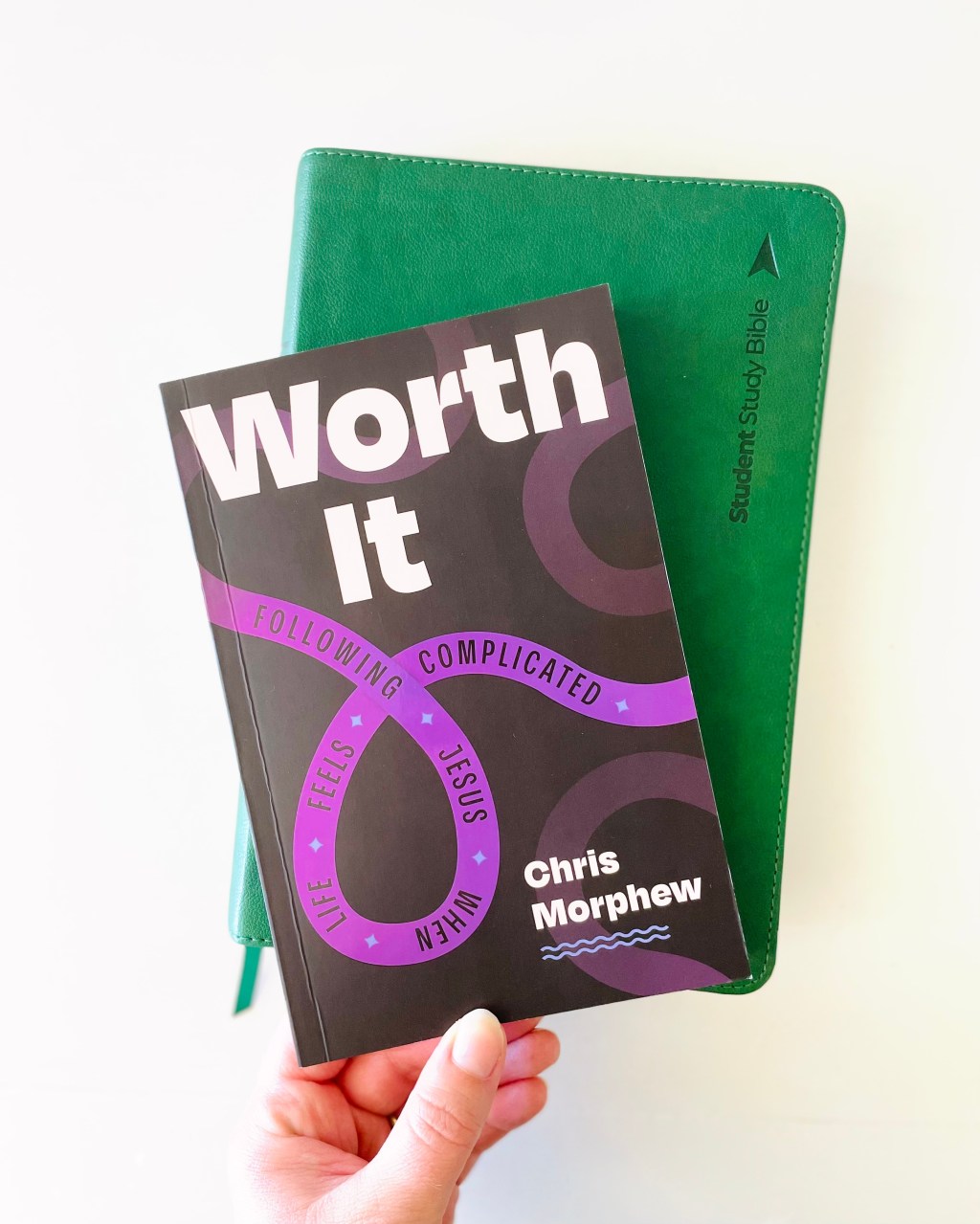
“I think this is one of my favorite Christian authors,” I said to my husband one evening. I had read the Big Questions series by Chris Morphew to my son a few years earlier, and that evening, I had just finished his new book Worth It: Following Jesus When Life Feels Complicated. Chris Morphew, who works as a teacher and school chaplain in Australia, really knows his audience and the questions that are keeping them up at night, but also how to disciple them without any hint of condescension, legalism, or fluff. Not only are his books incredible resources for youth, but I, as a mid-30s adult, have been so encouraged and challenged by his writing. Worth It is one of the best Christian books for teens that I have read, and it is one that I will be incorporating into our homeschool curriculum.
Who is Worth It Written For?
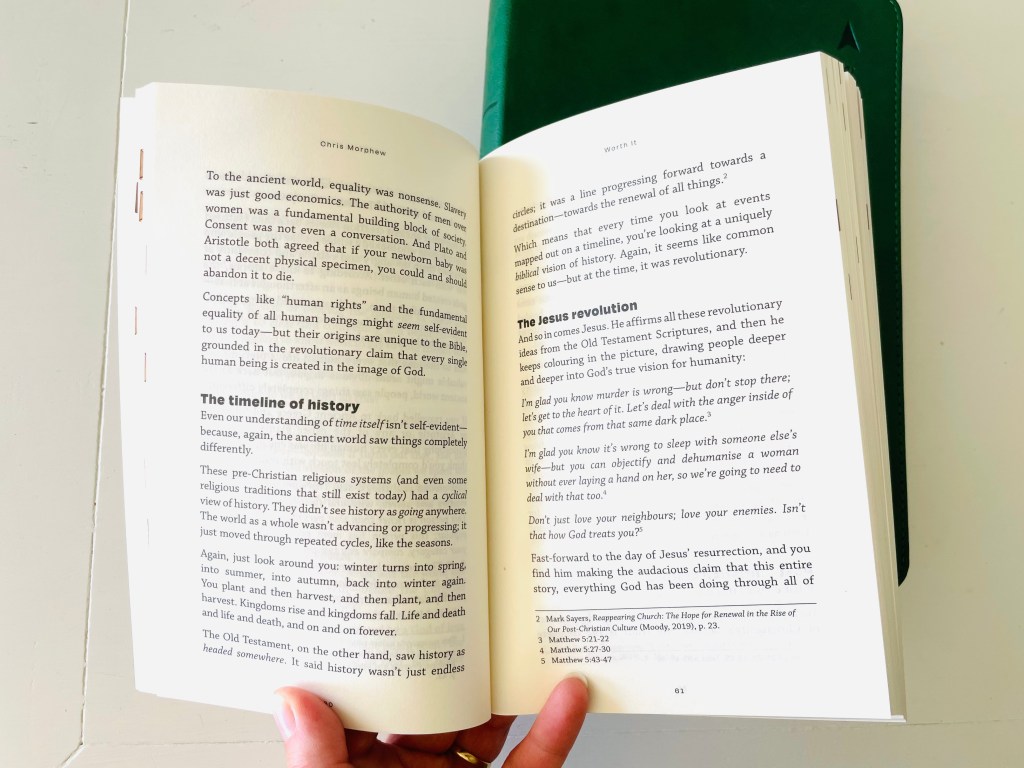
Worth It seems to be written for a slightly older audience than the Big Questions series. He understands the struggles and issues that youth (and adults) are encountering in today’s post-Christian culture. Whether that is feeling you are narrow-minded or intolerant for holding Christian beliefs or doubting if God is really unloving or if you are on the “wrong side of history.” The main theme of the book is whether or not following Christ is worth the hassle–and if it can even make a difference in our lives now.
Youth aren’t the only ones with these questions. I grew up as a pastor’s kid and then, as an adult, served as a missionary overseas. Even with over thirty years in the church, I don’t think I’ve heard someone explain things so clearly and with such kindness. I, too, am influenced by a port-Christian culture and often feel the accusation of being too intolerant or having beliefs that cause harm or “go against progress.” So I was so encouraged by how Morphew reminded me of our loving God who gave us meaning and purpose, even in our suffering.
“And God’s great plan for the future isn’t just to save you from hell or get you into heaven; it’s to restore everything that’s been lost and broken as we’ve turned away from him and to welcome us back into the fullness of life we were always made for.”

What is it about?
Ultimately, Worth It explores deep questions about Jesus, culminating in one big question: can we trust him?
He reminds us of how God is love and how we aren’t just living for the future but can have a full life on this earth now. For example, Morphew shares that we “read the Bible–not out of religious obligation, but to get to know God better, to keep learning how to trust him, and to keep figuring out how to live well in his world.” It is so great how Morphew connects how following Jesus leads to living well in our daily lives. Many in this generation want to know what the gospel does for us today, not just at the end of our lives on earth.
It is clear that Morphew views these kids and youth as people who have valid questions and are fully capable of engaging deep questions. He doesn’t dumb down theology, but he also doesn’t use Christianize or spiritual idioms that people not growing up in the church wouldn’t understand. He also carefully uses terms like “sin” that have a different meaning in today’s generation than the one I grew up in. In other words, he doesn’t assume that all readers have the same definition as he does.
The gospel message is present throughout this book, similar to how Sam Chan, in his book Evangelism in a Skeptical World, recommends presenting the gospel in a post-Christian, post-churched, and post-reached world. For example, Morphew identifies several universal existential cries for love, belonging, freedom, purpose, etc., and shows how Jesus is the “true fulfillment of the cultural storyline, but in a winsome way that doesn’t feel forced.”
“And so rather than telling my friend what I think, or what Christians say, I’ll try to frame my answers more like this: ‘Look, in the end, it doesn’t matter what I think. But what Jesus said about himself is, “I am the way and the truth and the life. No one comes to the Father except through me.” He said that all of history was pointing towards his great mission to renew the world and bring God’s people back to himself. Which, obviously, are some pretty bold claims. But I’ve weighed up all the evidence, and I’ve decided Jesus is worth trusting–which means I trust him about this too.”
Besides rooting us in the gospel and our identity in a loving God, Morphew teaches practical ways we can love our friends, love our enemies, and share the good news even when we face disagreement or criticism. This is such a well-rounded book that will be an encouragement to any young believer (and old)! He even talks about neuroplasticity and the influence and impact cell phones have on our spiritual lives.
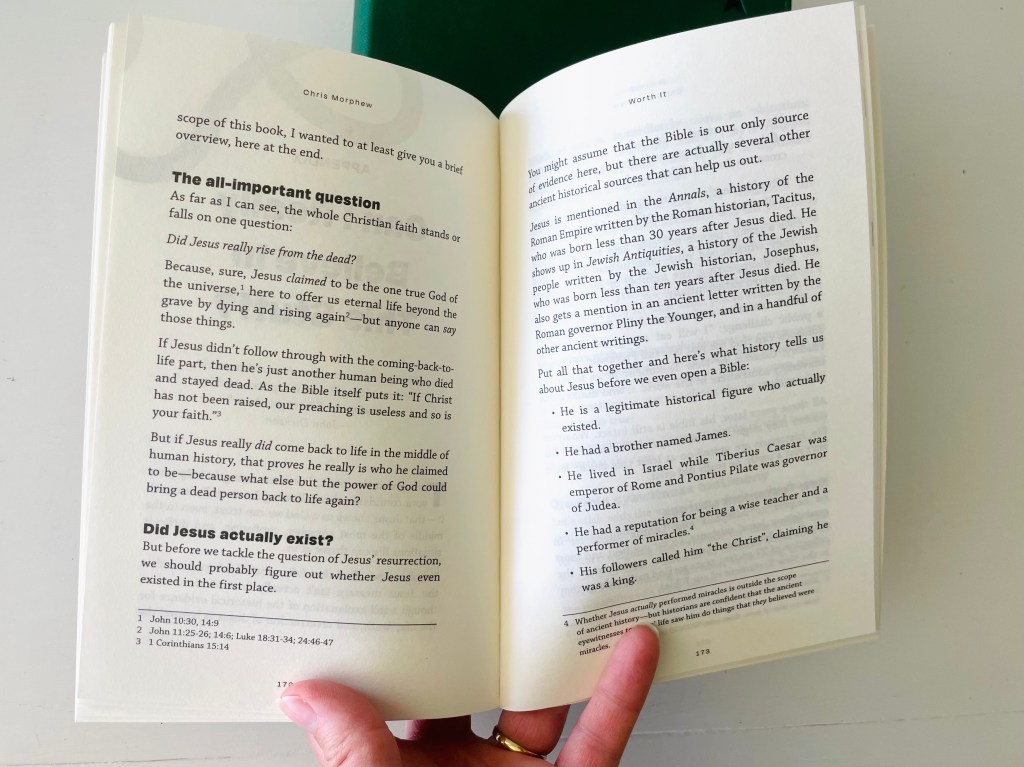
Finally, for those who may not have read his book How Do We Know That Christianity Is Really True?, he included an appendix called “Can I Really Believe in This Stuff?” that covers Jesus’ historicity, New Testament sources, eyewitness accounts, and more.
Favorite Quotes:
“[I]f you cut God out of the picture–if you think he’s just a story we’ve invented–you’re removing our whole foundation for the reality of human rights. If God is fictional, human rights are fictional too.”
“If we’re not careful, we’ll end up being influenced far more by the values of our wider culture than the values of Jesus, not because we’ve consciously decided our culture’s voice is more true or trustworthy, but just because we become what we give our attention to.”
“[I]f the good news of Jesus really is true, then it’s all true–which means the bits that make us feel out of place are just as beautiful and good and important to hold on to as the bits that make us fit right in.”
Content Considerations
I think the only concern I had for this book, is that John Mark Comer was quoted a few times, a popular Christian author that seems to be developing a distorted view of God.
I received this book from The Good Book Company in exchange for an honest review.
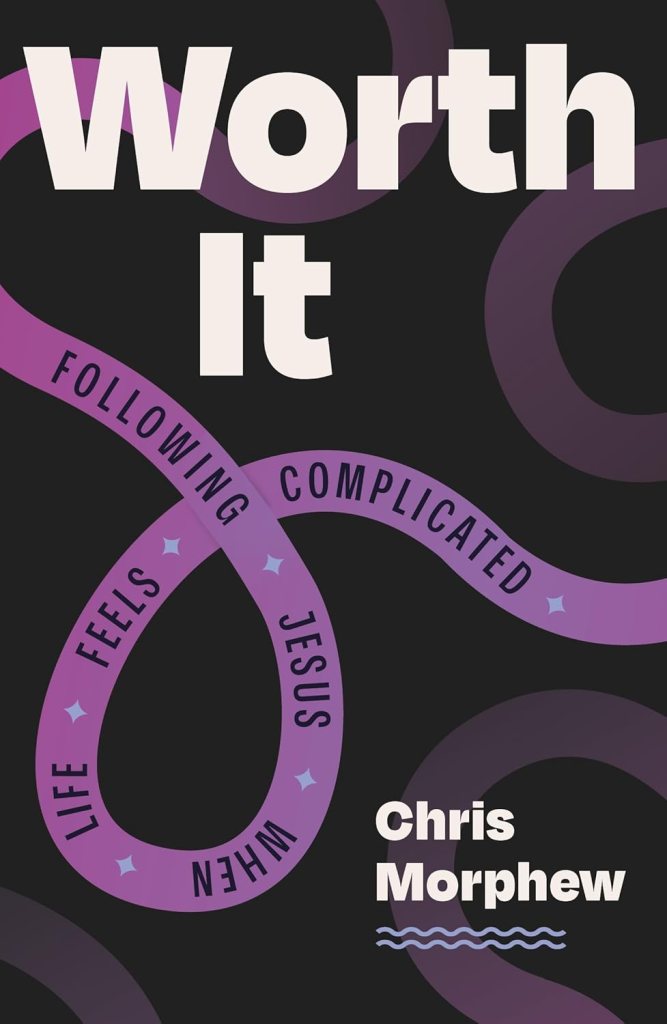
Worth It: Following Jesus When Life Feels Complicated
by Chris Morphew
The Good Book Company, 2025
160 pages


 Lauren Ducommun
Leave a comment