
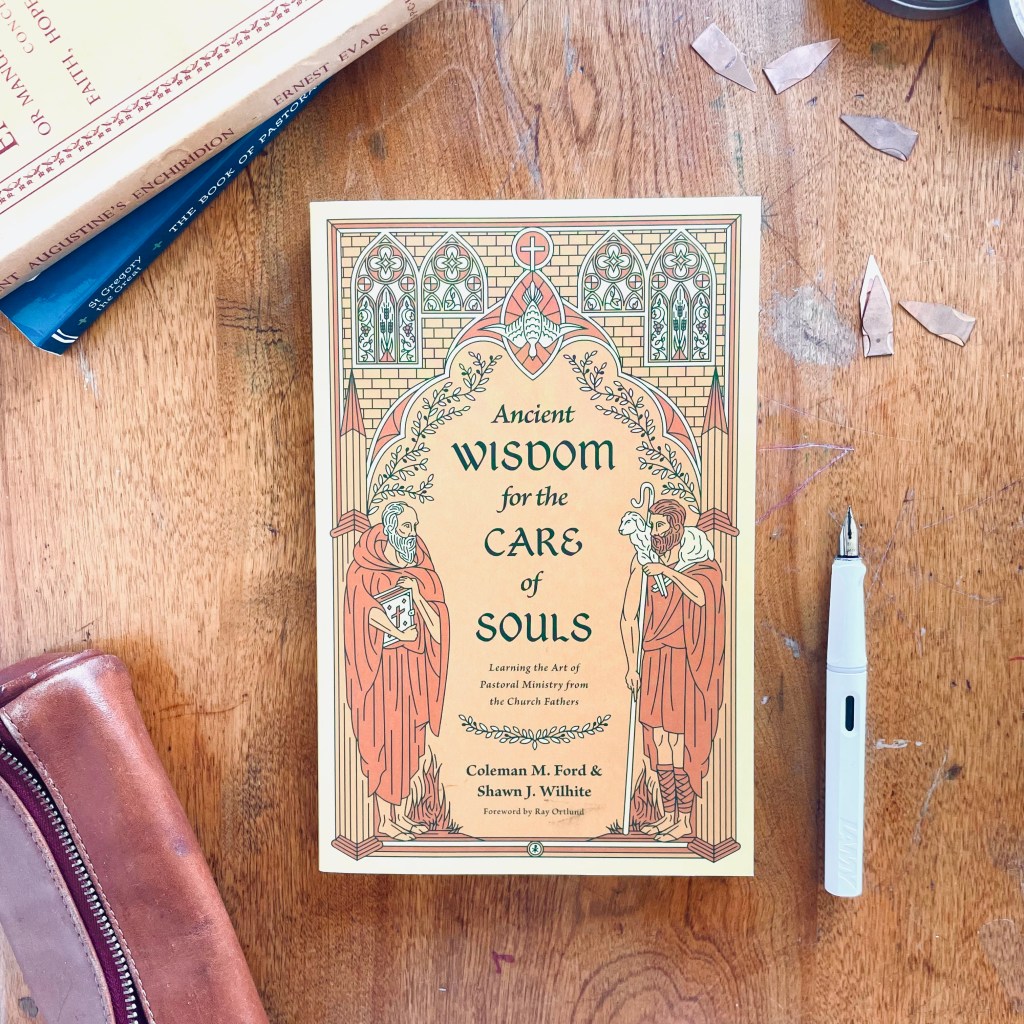
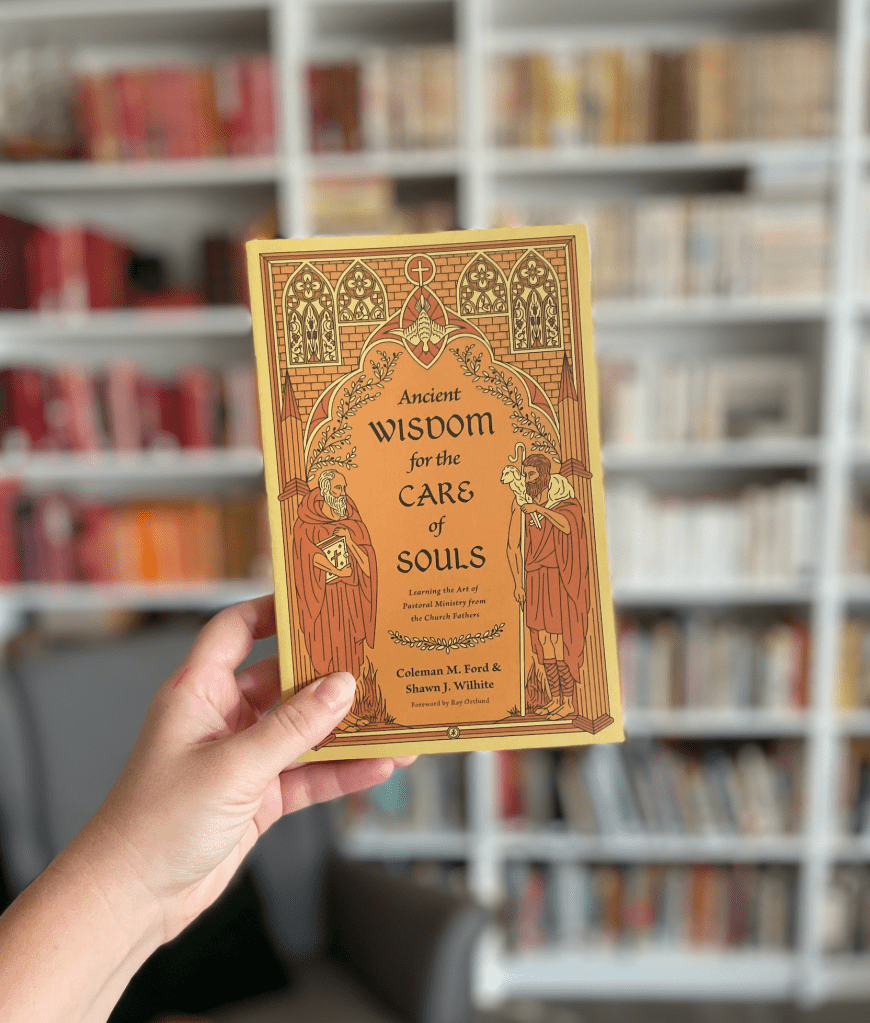
Our churches today are prone to a host of leadership problems, many of which are rooted in unbiblical or nonbiblical ideas of what a pastor is or are influenced by leadership models and agendas from the business world. In their book, Ancient Wisdom for the Care of Souls, Coleman Ford and Shawn Wilhite share the lives and works of ten ancient church pastors to learn about the virtues and spiritual life of a pastor, the theological vision of a pastor, and the ministry of a pastor. Their desire isn’t to fix the problem but to learn the art of pastoral ministry from the Church Fathers.
[Side note: I had the privilege of taking a course with Dr. Ford at Texas Baptist College, and even in his humanities classes his pastoral heart is present; his care for his students’ souls shines through his interactions and assignments. He is not writing about some theoretical idea, but I believe he is truly applying what he is learning from the Church Fathers to his own life and ministry.]

Is This Book Just for Pastors?
I am not a pastor, nor do I seek to be one. But Ancient Wisdom for the Care of Souls is applicable to all Christian readers. Why?
1. All believers should have a solid understanding of what the biblical call, role, and qualifications for pastors are and what they are not.
2. The biblical qualifications for pastors are virtues that every believer should strive for. We should all be hospitable, living lives of integrity, and growing in spiritual maturity. As Ford and Wilhite remind us, theology isn’t just for pastors or the academy, “[i]n fact, it is primarily for the church.”
3. As a mom, I found this book both convicting and edifying in my current life stage. I am not a pastor, but I, too, have souls that I am caring for, and I can learn the art of teaching and ministering to my kids from these Church Fathers. Again, this applies to all believers, whether single or married, as we are all called to be ministers of reconciliation and to build up the body of Christ.

A Call to Consider Classical Ministry
Ford and Wilhite believe that one’s theological vision is what shapes one’s pastoral ministry, and that we can benefit from looking back at what the classical ministry of the early church fathers was shaped by. To address the root issues of pastoral ministry today, “we must take time to mine the depths of Christian antiquity, be shaped by its world, and consider the theological riches of our heritage before we can begin reshaping our present landscape.”
“A classical ministry is characterized by classical theology, virtue, integrated spirituality and theology, local community, and care for souls.”
Each chapter of Ancient Wisdom for the Care of Souls introduces us to a different pastor: Gregory of Nyssa, Athanasius, John Chrysostom, and more. These patristic fathers usually wrote in the context of the local church from a pastoral heart. They wrote to help their readers understand biblical redemptive history, warn of the dangers of heresy, explain Trinitarian theology or the sacraments, and more.
A key theme throughout the book is that believers–especially pastors–need to slow down, spend time in prayer and deep study of God’s Word, and partake in contemplative practices. I found Ford and Wilhite’s explanation of what Contemplative Tradition is (and what it is not) to be very helpful.
“Gregory the Great used the double love as a guide to the contemplative life. To love God, one must seek him in times of focus and withdrawal. To love neighbor, one must reenter society to love and engage others.”
When we slow down and care for our own souls we are able to care for the souls around us. I also appreciate Ford and Wilhite’s call for pastors to “cultivate intellectual depth”, as theology greatly impacts how we do ministry. Pastors should also labor to be clear communicators of God’s word.
“We refresh our people from the rivers of God’s life as we, like the deer drinking from its flowing streams, grow in our dependence upon him and his power.”
Ancient Wisdom for the Care of Souls has been one of the most encouraging and practical books I’ve read on Christian Ministry in a long time (it probably helps that these Church Fathers have stood the test of time). Ford and Wilhite provide examples of exercises that we apply in our lives to grow in theology, virtue, community, and care for souls. Whether you are seeking to go into ministry, have been a pastor for several decades, or are a stay-at-home mom raising kids, may the classical tradition and biblical wisdom of these early church fathers help you cultivate the care of souls.

Favorite Quotes:
“In this economy, the less Christian leaders seek their own glory, the more they glorify God.”
“[It] doesn’t so much matter what a particular pastor’s level of intelligence or education are–what is most important is a consistent intake and deep study of God’s word.”
“[T]hese two church fathers knew the importancec of educating their congregation through preaching and show us that preaching is a task in transmitting crucial information for knowing God, his will, and how he wants us to live.”
“Irenaeus models to Christians today the necessity of Christian doctrine as the antidote to pernicious error.”
“…[P]roper reflection on God and living a godly life was the calling of every Christian.”
“For the pastor, busyness is a disease that eventually erodes time for reflection and makes him nothing more than a facilatator of meetings.”
“[W]e must maintain a robust philosophical ontology of Scripture and a spiritually meaningful teleology of theology.”
I received this book from Crossway in exchange for an honest review.
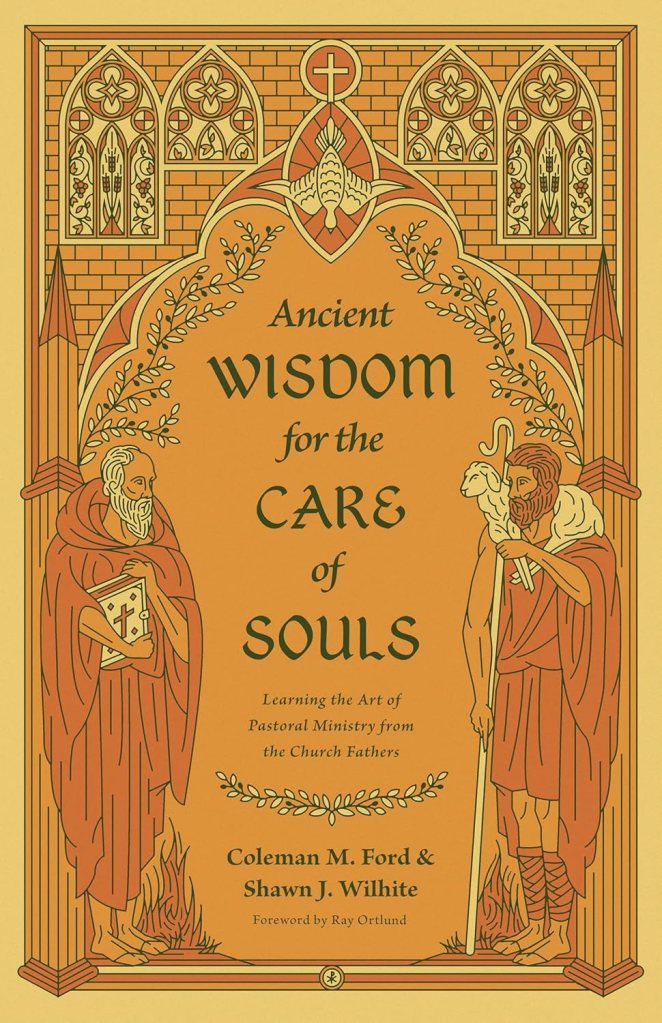
Ancient Wisdom for the Care of Souls: Learning the Art of Pastoral Ministry from the Church Fathers
by Coleman M. Ford & Shawn J. Wilhite
Crossway, 2024
256 pages

 Lauren Ducommun
Leave a comment