The world that J.R.R. Tolkien created had a formative part of my childhood. At that time, I was absorbed in Middle-earth–its characters and its languages. Indeed, the hours I spent pouring over an Elvish dictionary may have even been what sparked a love of languages–and pursuit of linguistic studies. Over time, I began to see and understand the thematic elements of good versus evil, friendship, and enduring dire circumstances. This Christmas, I read a fantastic and enjoyable biography of J.R.R. Tolkien written by Jeremy W. Johnston, who highlighted the Christian worldview through which Tolkien wrote his epic masterpieces.
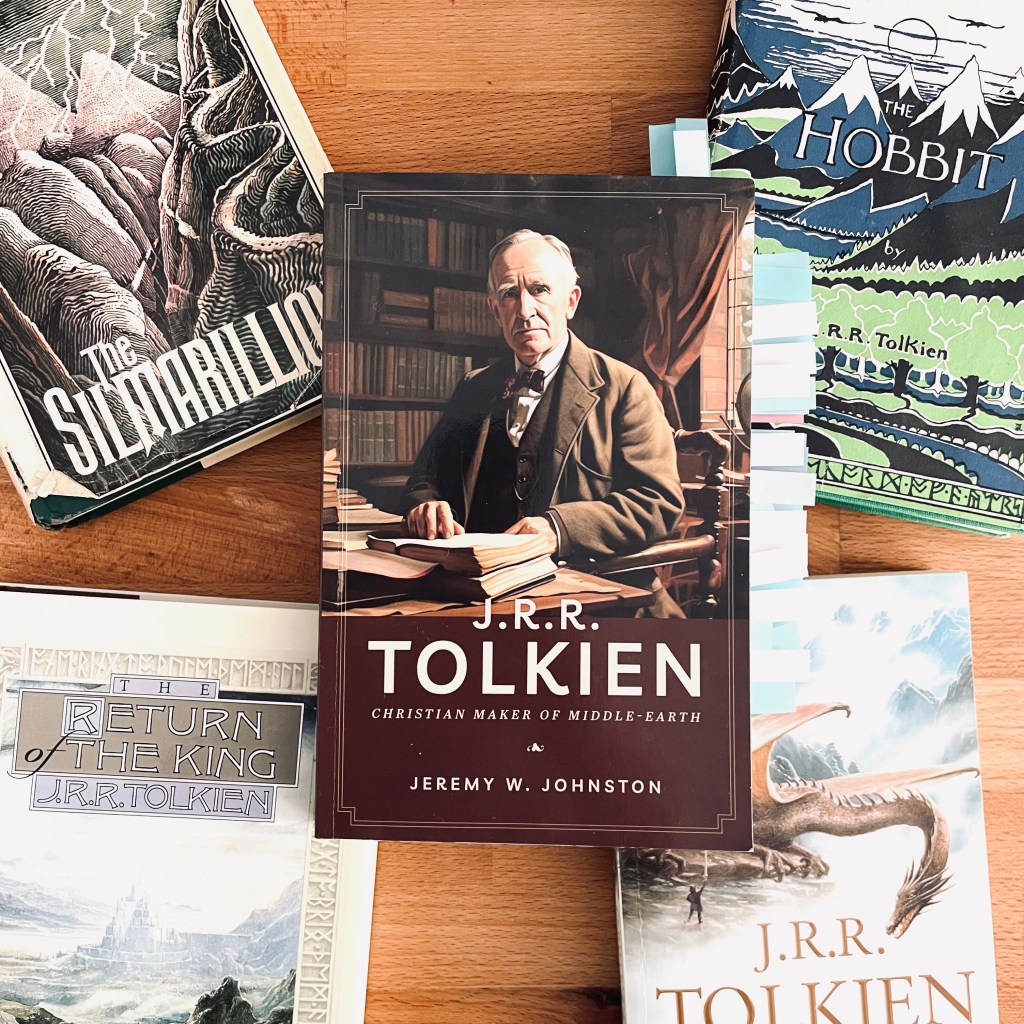
I had not read a biography about Tolkien since I was around ten years old, so it was quite fascinating to read about his life again in J.R.R. Tolkien: Christian Maker of Middle-Earth. From his birth in South Africa, life as an orphan, military service during World War I, to his career as an Oxford professor, Johnston has interwoven the events in Tolkien’s life to share how they and his Christian faith have impacted his creative life. Tolkien is most known for the 20th-century masterpiece, The Lord of the Rings. While primarily recognized as a fantasy work, Tolkien saw it as a Christian work. Tolkien believed that fantasy stories and fairy tales “awaken readers to a deeper and more profound understanding of truth and reality” and “regain a clearer view of life.” (Johnston). His stories and tales are permeated with biblical truths and realities. This is perhaps why Tolkien hass said, “I am a Christian (which can be deduced from my stories).”
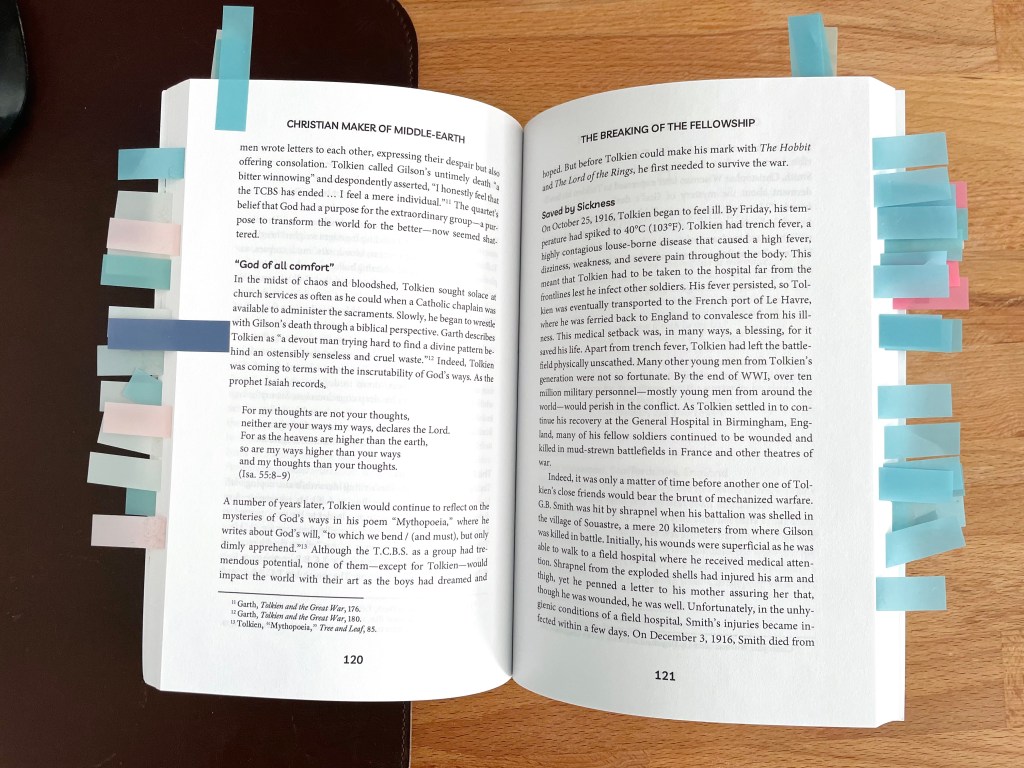
While Tolkien experienced horrific things in his life, due to his Christian worldview he was able to write with eternal hope in mind–something Johnston shared Tolkien referred to as a ‘long defeat’. He wrote, “To the careful observer, underlying all of Tolkien’s writing is the Christian hope that this ‘momentary affliction is preparing for us an eternal weight of glory beyond comparison.’”
Although a devout Roman Catholic, Johnston shares that based on Tolkien’s letters and writings, he is convinced that “[Tolkien] did have genuine faith in Jesus Christ.” I appreciated the note in the appendix that went further in-depth on this. It was this same genuine faith through which God used Tolkien’s friendship with C.S. Lewis to “awaken Lewis to true faith, and it was through this friendship that Lewis was able to become one of the most important Christian apologists of the 20th century.”
I was struck for the first time by how influential Tolkien’s mother was in his life. Johnston wrote, “[Tolkien] often acknowledged the powerful role of his mother as his first teacher and as his first spiritual mentor, and he was very appreciative of the solid intellectual foundation she provided for him as a student of literature and language.” This was such an edifying reminder to one who is also the mother of two children.
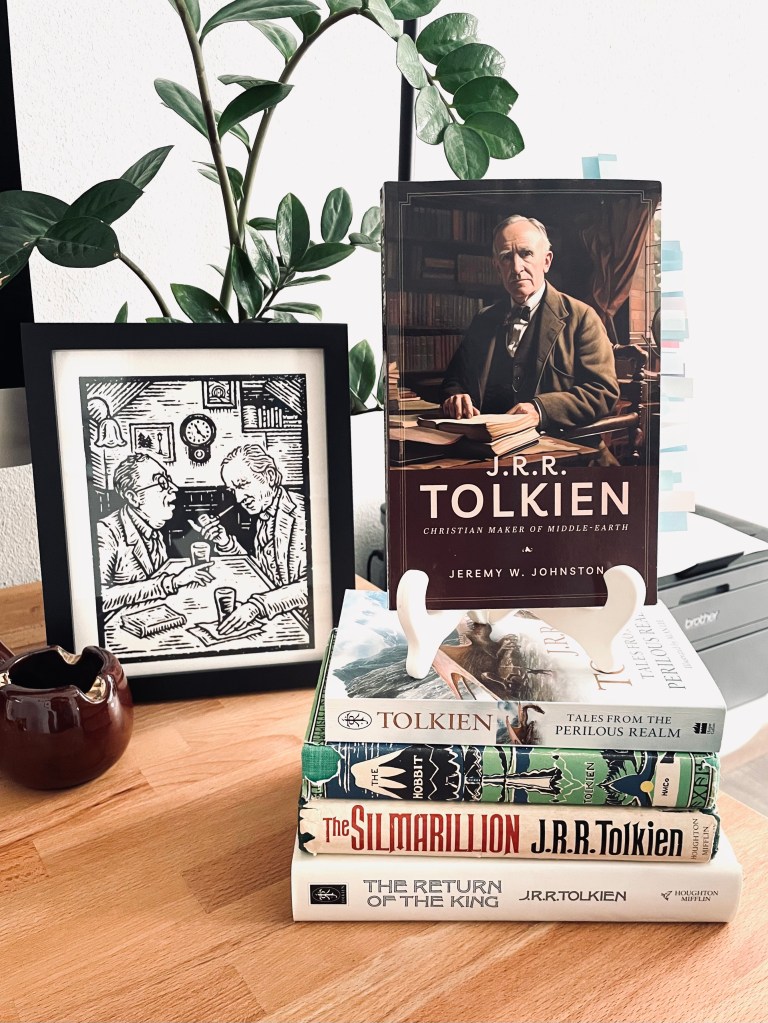
If the Carpenter biography of Tolkien is intimidating to you, or if you would like a shorter yet thorough and enjoyable book to become more familiar with this world-renowned author, I highly recommend J.R.R. Tolkien: Christian Maker of Middle-Earth by Jeremy W Johnston. This would even be an excellent read for a student in middle school or high school who would like to learn more about a Christian artist living through the World Wars, or the maker behind one of the most beloved literary works of the 20th century.
The publisher sent me these books in exchange for an honest review.

J.R.R. Tolkien: Christian Maker of Middle-Earth
by Jeremy Johnston
H&E, 2023
268 pages

 Lauren Ducommun
Leave a comment