
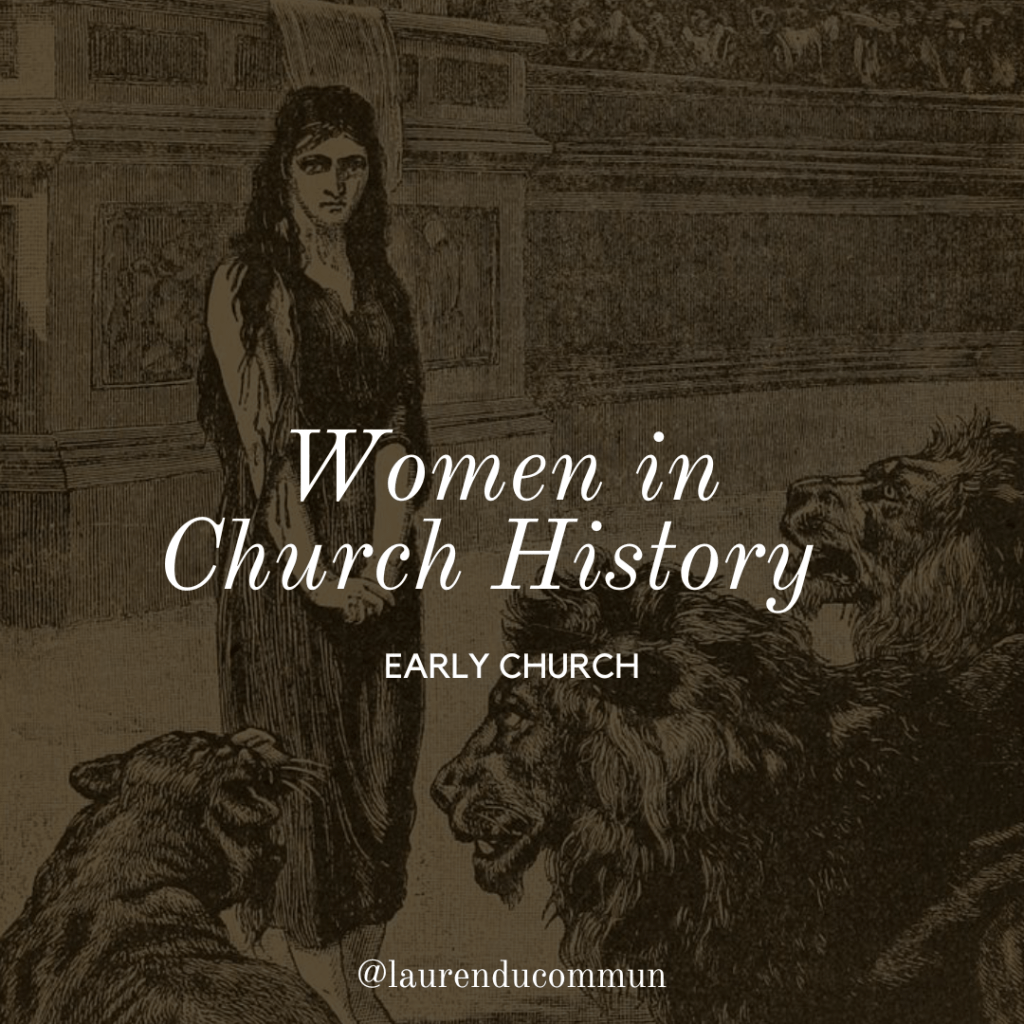
This October, I am going to highlight Christian women from different eras and centuries of church history. Today I’m sharing about three women found in the New Testament.
Women in the Gospels offer incredible eyewitness testimonies to wo Jesus is , and how he noticed, protected, and dignified women in a culture that often did not. Women in the epistles provide insight and examples of how they followed and served Jesus, that we can model today.
“We are not a new philosophy but a divine revelation. That’s why you can’t just exterminate us; the more you kill the more we are. The blood of the martyrs is the seed of the church.”
— Apologeticum, Tertullian
Perpetua

Perpetua was a young mom and Roman noblewoman in northern Africa when she was arrested for being a Christian. Her father pleaded with her to make a sacrifice to the emperor, but she refused. Perpetua wrote during her imprisonment, a journal now known as “The Passion of Saints Perpetua and Felicity.” Her writings were “the first writing extant by a Christian woman” (Severance).
She and another woman, Felicitas, were gored in an arena and then killed by a gladiator’s sword. Perpetua was only 22 years old, and her last words were, “Stand fast in the faith, and love one another, all of you, and be not offended at my sufferings.”
Augustine, also from Carthage, preached several sermons on Perpetua and Felicitas’ memory during a memorial day for martyrs.
Recommended Reading:
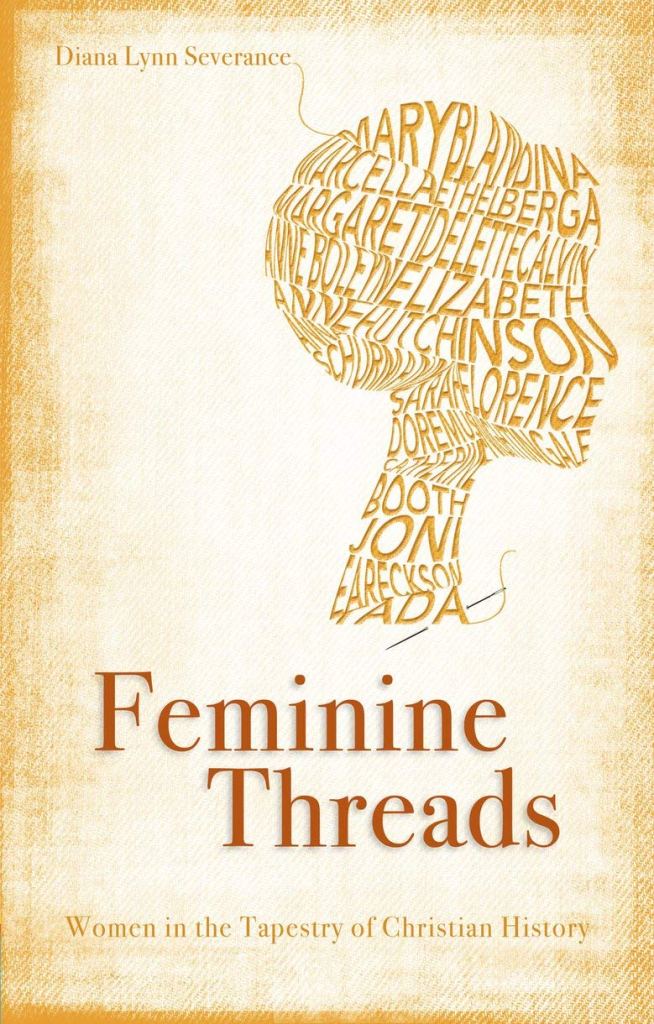
Feminine Threads: Women in the Tapestry of Christian History by Diana Severance (2012)

Radiant: Fifty Remarkable Women in Church History by Richard Hannula (2015)
“Perpetua made a decision, not between life and death but between Christ and Rome. Her courage and determination only reminded them that perhaps there was more to these Christians than meets the eye. Could it be that what they believed was actually true?”
— Water from a Deep Well, by Gerald L. Sittser
Crispina

Crispina was also a young mom from North Africa. She was arrested and brought before Anullinus, a Roman governor. He compelled her to sacrifice to the Roman gods, but she refused, saying, “I am ready to suffer any tortures that you lay upon me rather than dirty my soul with idols which are merely the creation of men” (Hannula).
She was immediately executed, but the conversation she had with the governor, and the story of her death was written down. “It circulated widely, encouraging believers to hold fast to Christ until the end” (Hannula).
Augustine, her contemporary, wrote of her strength in the Lord, saying, “Is there anyone in Africa who does not know about these events, brothers and sisters? Scarcely, for she was extremely famous, of noble stock and very wealthy.”
Recommended Reading:
Feminine Threads: Women in the Tapestry of Christian History by Diana Severance (2012)
Radiant: Fifty Remarkable Women in Church History by Richard Hannula (2015)

 Lauren Ducommun
Leave a comment