
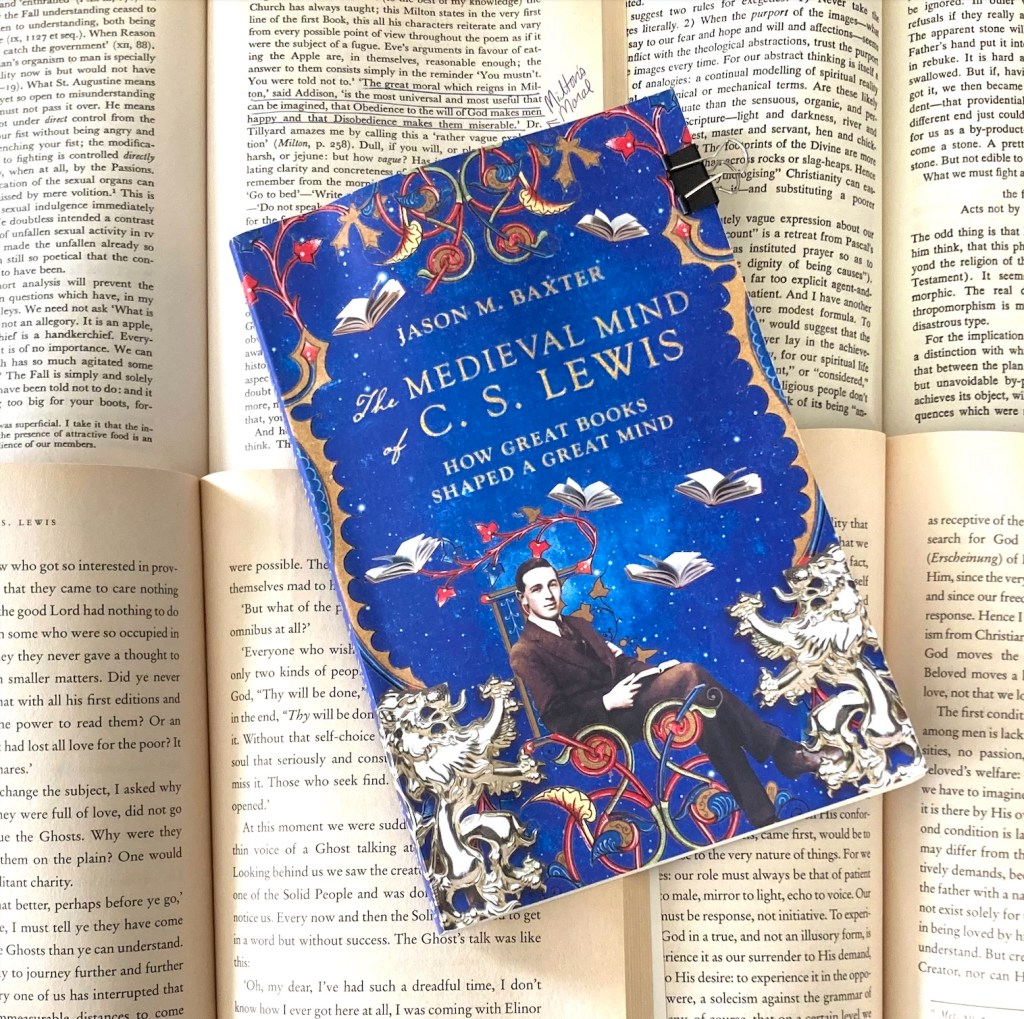
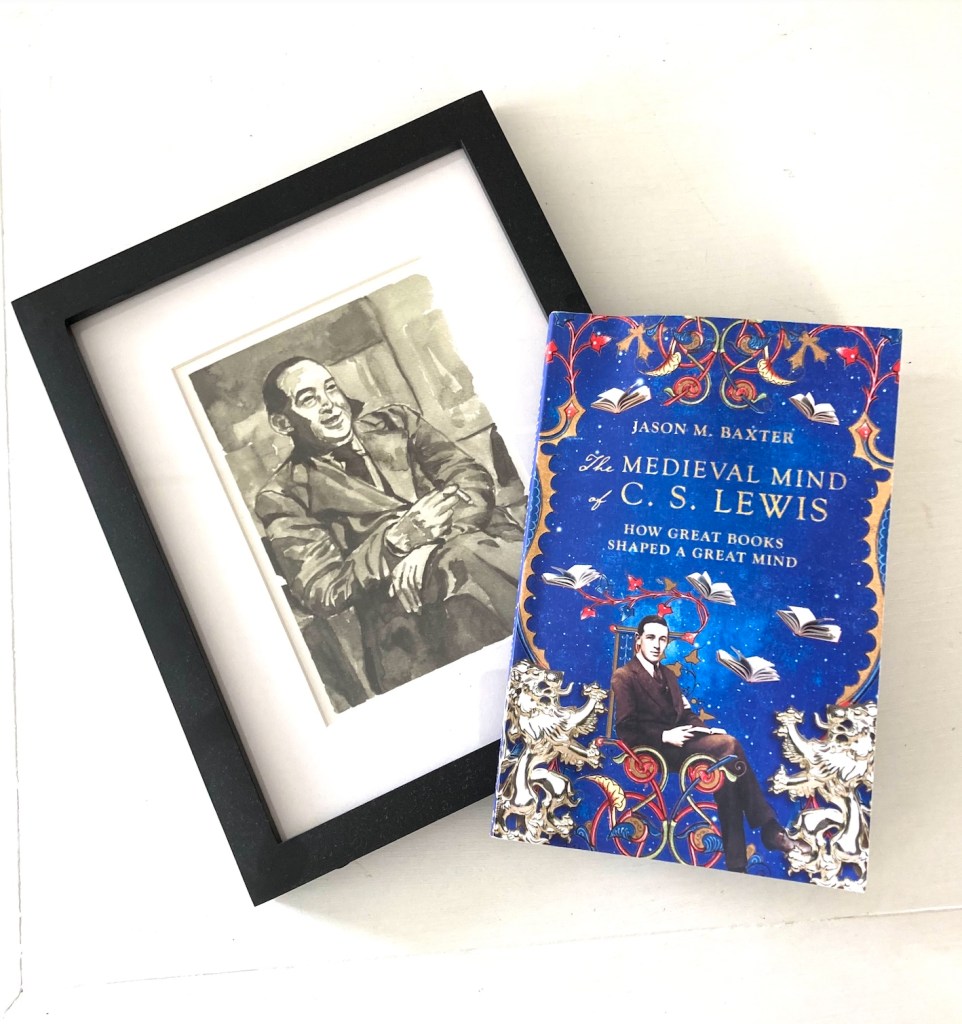
Book Review: The Medieval Mind of C. S. Lewis: How Great Books Shaped a Mind by Jason M. Baxter
IVP Academic, 2022
176 pages
The older I become, the greater my appreciation for C. S. Lewis grows. He was wise beyond his years and seemed to have such a well-rounded view on reality and spirituality. Jason M. Baxter would argue that it was partially great books and thinkers of the medieval time period that shaped his thinking and helped form his worldview.
This was a splendid book, full of both aha moments and “I have no idea what he is talking about” moments. I first heard about The Medieval Mind through The Literary Life Podcast and so appreciated their view on literature, and found similar ideas throughout Baxter’s book as well. I would have to say, I began this book before my philosophy class at Texas Baptist College. I understood a lot more when I picked up this book after the class ended, so having a basic knowledge of Plato, Aristotle, and the Enlightenment, etc., may be beneficial. It made a lot more sense, or at least had more depth, after I gained some philosophical lingo.
All that to say, what impacted me the most from this reading was the idea of how Lewis felt it was his duty to preserve our classical and medival heritage. One way he did this was “finding ways to transpote, translate, and re-create the atmostphere of the ancient world in a modern vernacular, as he once explained in a lecture on Christian apologetics: ‘You must translate every bit of your Theology into the vernacular.’”
Just as in philosophy class where you have a moment where you see everything clearly, and your brain explodes, before returning to a state of “I don’t know how to articulate this”… you’ll have moments like this, too, while you read this book. And that’s okay. We don’t have to understand everything perfectly, and I’m sure I will have to re-read this book many times before I understand everything the author was trying to communicate. But overall, it was beautiful.
Favourite Quotes:
- “Every Sunday turns back into a Monday morning, but they do help us to rearm our will with the desire to attend to those daily acts of faithful obedience.”
- “…Lewis reveals that his storyis an imaginative vehicle–a modern fantasy story or fairy tale–devised to make a metaphysical (and medieval) point: in medieval thought pure evil is the same as nothingness, it’s like absolute zero on the Kelvin sacle. Ultimate happiness is, rather, ontological fullness.”
- “Lewis felt Dante had special value for the modern world: he provideded the model for how to speak of spiritual realities in a way in which they felt real, attractive, and weighty: in a phrase, he wrote a poetry that communicated the ‘weight of glory.’”
- “…Lewis described such a process as the slow spread of a spiritual cancer, which began by disenchanting the universe, moved to demystifying the human body, and ended by casting doubt on the very possibility of rationality.”


 Lauren Ducommun
Leave a comment